

On-Page SEO Explained Simply for Better Google Rankings
Introduction
On-page SEO is one of the most important parts of search engine optimization that every beginner must learn. If you want your website to rank on Google, you cannot ignore on-page SEO because it directly affects how search engines understand your content.
On-page SEO helps search engines understand your website content and rank it properly. In simple words, on page SEO means optimizing everything inside your website pages so that Google can easily read, understand, and rank your content higher in search results.
If you are completely new to SEO, you should first understand the basics here:
SEO for Beginners Guide
And if you want to understand SEO cost and services, check this guide:
SEO Pricing Guide
What is On-Page SEO?
On page SEO refers to all the optimization techniques that are applied directly on your website pages to improve ranking and visibility on search engines like Google.
It includes content optimization, HTML structure, keyword usage, and improving user experience.
The main goal of on page SEO is to help search engines understand what your page is about and match it with relevant search queries.
Why On-Page SEO is Important
On-page SEO is important because it is the foundation of your entire SEO strategy.
Without proper on page SEO, even high-quality content may not rank well.
Key benefits:
- Improves Google ranking
- Helps search engines understand content
- Increases organic traffic
- Improves user experience
- Boosts website authority
Key Elements of On-Page SEO
1. Keyword Optimization
Keywords are the foundation of on page SEO.
You should include your main keyword naturally in:
- Title
- Headings
- First paragraph
- URL
- Meta description
Avoid keyword stuffing because it can harm your ranking.
2. High-Quality Content
Content is the most important ranking factor in SEO.
Good content should:
- Solve user problems
- Be easy to read
- Provide complete information
- Be original and valuable
Google prefers content that fully answers user intent.
3. Title Tags
Title tags are very important for SEO.
A good title should:
- Include main keyword
- Be attractive and clickable
- Be under 60 characters
Example:
✔ What is On Page SEO and How It Works
4. Meta Description
Meta description is a short summary of your page that appears in Google search results.
It should:
- Be clear and engaging
- Include keyword naturally
- Encourage users to click
5. Headings Structure (H1, H2, H3)
Proper heading structure helps Google understand your content hierarchy.
Example:
- H1: Main Title
- H2: Main Sections
- H3: Sub-sections
6. Internal Linking
Internal links connect different pages of your website.
This helps:
- Improve site structure
- Increase page authority
- Improve user navigation
Example:
SEO pricing guide:
7. Image Optimization
Images also affect SEO performance.
You should:
- Use alt text
- Compress images
- Use proper file names
8. URL Structure
SEO-friendly URLs should be short and clean.
Example:
❌ example.com/page123?id=45
✔ example.com/what-is-on page-seo
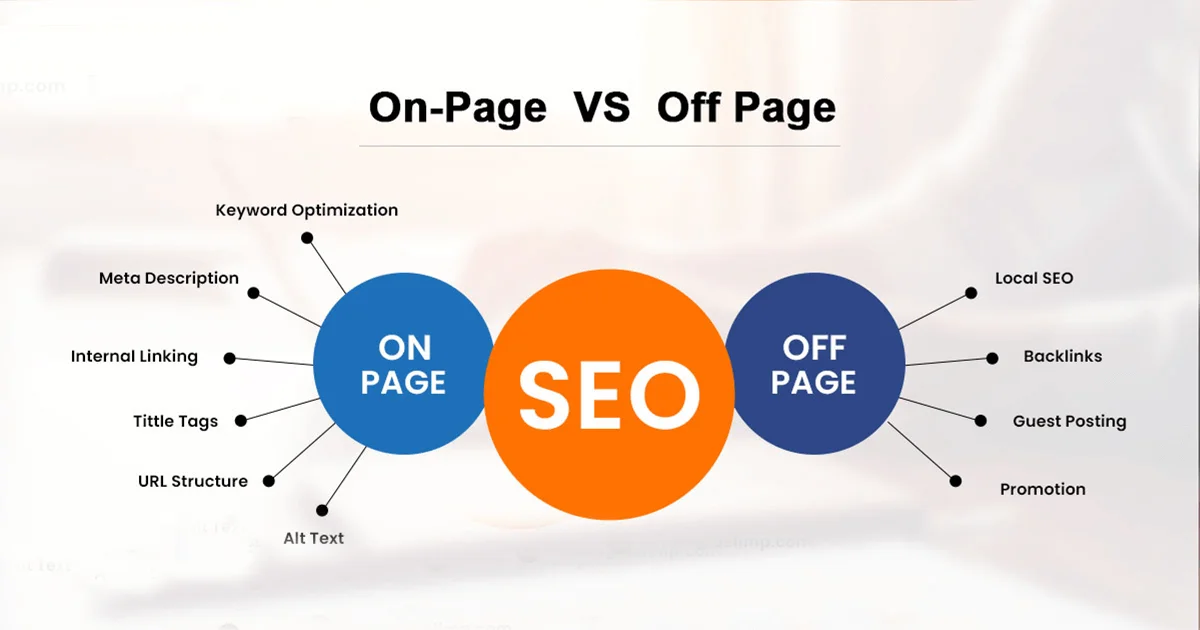
On-Page SEO vs Off-Page SEO
| On-Page SEO | Off-Page SEO |
|---|---|
| Done inside website | Done outside website |
| Content optimization | Backlinks building |
| Title, meta, keywords | Social signals, links |
| Full control | Less control |
Both are important for ranking.
Common On-Page SEO Mistakes
Beginners often make these mistakes:
- Keyword stuffing
- Poor content structure
- No internal linking
- Missing meta tags
- Ignoring user experience
Avoiding these mistakes can improve your ranking significantly.
How On-Page SEO Helps Ranking
On page SEO tells Google what your page is about and how useful it is for users.
If your content is well-optimized, Google can easily match it with search queries and rank it higher.
Best Practices for On-Page SEO
- Use keyword naturally
- Write helpful content
- Improve page speed
- Use proper headings
- Add internal links
- Optimize images
Connection with SEO Learning
On-page SEO is just one part of SEO.
If you want to learn full SEO step by step, start here:
👉 SEO for Beginners Guide
And understand SEO cost and services here:
👉 SEO Pricing Guide
Final Thoughts
On-page SEO is not just a basic optimization technique, it is actually the backbone of your entire website ranking strategy. Without strong on-page SEO, even high-quality backlinks and technical improvements cannot fully deliver long-term results.
The main focus of on-page SEO is to make your content easy to understand for both users and search engines. When Google clearly understands your page structure, keywords, and content relevance, it becomes much easier for your website to appear in top search results.
Another important thing to remember is that on-page SEO is not a one-time task. It is an ongoing process that improves with time. As your content grows, you should regularly update it, improve readability, and add more value for users. This helps maintain rankings and also improves user engagement.
If you consistently apply on-page SEO best practices such as keyword optimization, internal linking, and high-quality content creation, your website will gradually build strong authority in your niche. This authority is what ultimately helps you compete in competitive search results.
In simple terms, on-page SEO is about making your website better for users first, and search engines second. When you focus on user satisfaction, rankings naturally improve over time.
Conclusion
On-page SEO plays a critical role in determining how well your website performs on search engines like Google. It is the foundation of every successful SEO strategy because it directly controls how your content is structured, understood, and ranked.
If you want long-term success in SEO, you must treat on-page SEO as a continuous improvement process rather than a one-time setup. From keyword optimization to content quality, every small detail contributes to your overall ranking potential.
Beginners should focus on mastering the basics first, such as writing valuable content, using proper headings, optimizing meta tags, and building internal links. These simple steps can make a huge difference in how search engines evaluate your website.
It is also important to understand that SEO success does not happen overnight. It requires patience, consistency, and regular updates. Websites that consistently improve their on-page SEO tend to outperform competitors over time.
When combined with off-page SEO and technical SEO, on-page SEO becomes even more powerful and helps you build a strong, trusted, and high-ranking website.
In the end, the goal of on-page SEO is simple: create better content for users and make it easier for search engines to understand. If you can achieve that balance, your website will continue to grow and rank steadily in search results. That is why on-page SEO is essential for every website that wants to rank on Google.